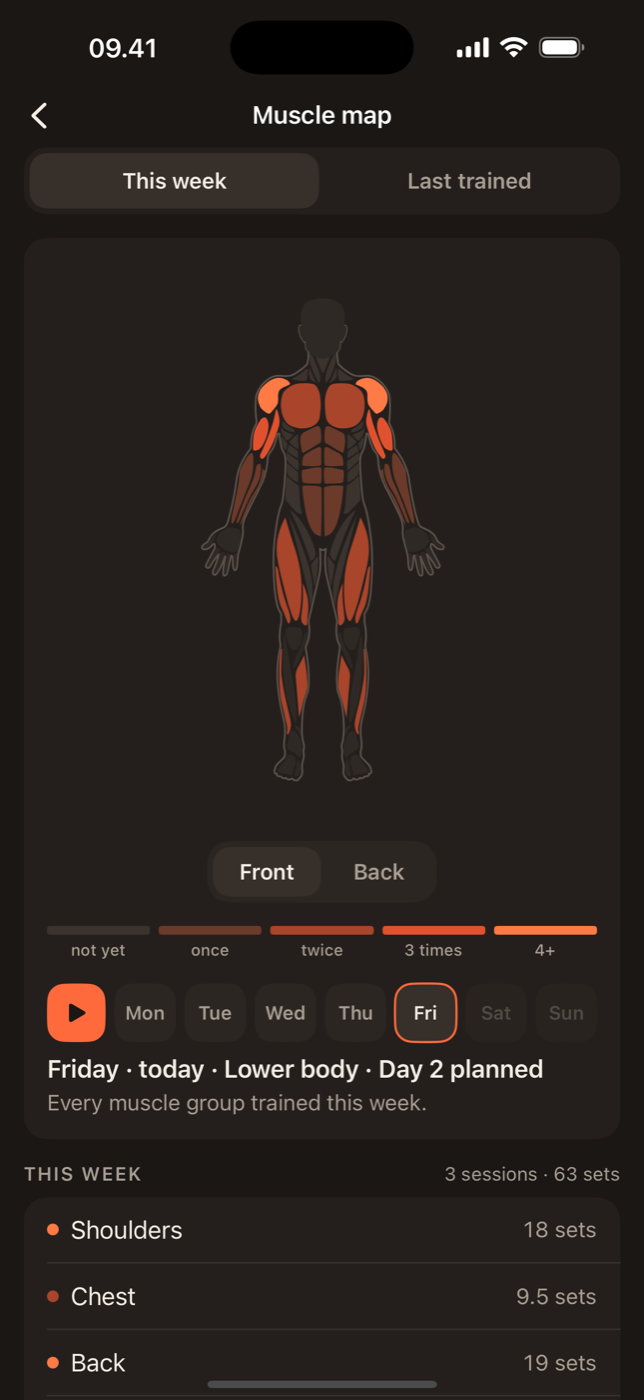
Ask ten lifters how many sets a muscle needs in a week and you will get ten numbers. The research is less scattered than the gym floor. For most people training for muscle, somewhere between 10 and 20 hard sets per muscle per week is where growth is reliable, with the low end plenty for a beginner and the high end useful for a muscle you are trying to bring up. This guide explains where that range comes from, how to count a set, and how to know which end you are on.
What counts as a set
A set counts when it is taken close to failure with reasonable form: the last one or two reps were hard and you could not have done more than two or three more. Warm-ups do not count. Sets of five at a weight you could do for twelve do not count. This is why the range is wide: a set of eight where the last rep barely moves is worth more than a set of eight you could have doubled.
Sets also count toward more than one muscle. A bench press is a chest exercise, but your front shoulders and triceps are working too. The simplest way to handle this is the one Lift uses on its muscle map: a set counts fully for the primary muscle and half for each helper. Three sets of bench press are three sets for chest, one and a half for shoulders and one and a half for triceps. Count this way and your arms usually turn out to be getting more work than you thought.
Why 10 to 20
Meta-analyses of resistance training studies show a dose-response: more weekly sets, more growth, up to a point. Below about ten hard sets a week a muscle grows, but slowly. Between ten and twenty the gain per extra set is clear. Above twenty the return per set shrinks and recovery starts to bite, especially for big compound lifts. Individual studies find people responding well to more, but they tend to be experienced lifters running short blocks, not a permanent setting.
For a beginner the low end is right. Ten sets a week for a muscle, split across two sessions, is enough to see the weight go up for months. Adding sets before you have exhausted that progress just adds fatigue.
Frequency changes what a set is worth
Twenty sets of chest in one session is not the same as ten on Monday and ten on Thursday. After eight to ten hard sets for one muscle in a session, the later sets are done tired and are worth less. Spreading the same weekly volume over two or three days keeps each set high quality. This is the main argument for an Upper/Lower split or Push Pull Legs over a body-part day: every muscle gets hit at least twice.
Reading it off your own log
You do not need a study to find your number. You need a log and a few weeks.
- Pick a muscle and count its effective sets for the week, helpers at half.
- If the weight or reps on its main exercise have gone up in the last three weeks, the volume is working. Leave it.
- If nothing has moved for three weeks and you are sleeping and eating normally, add two sets a week for that muscle and hold for another three weeks.
- If you are constantly sore, joints ache, or the weights are going down, cut a quarter of the sets for two weeks.
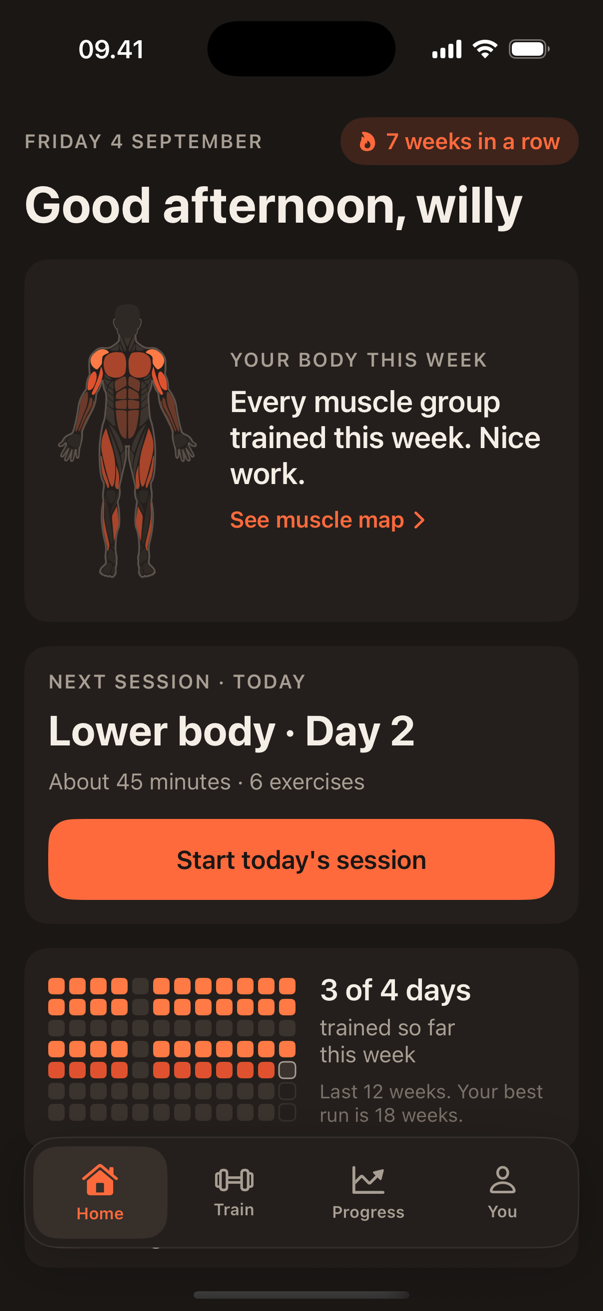
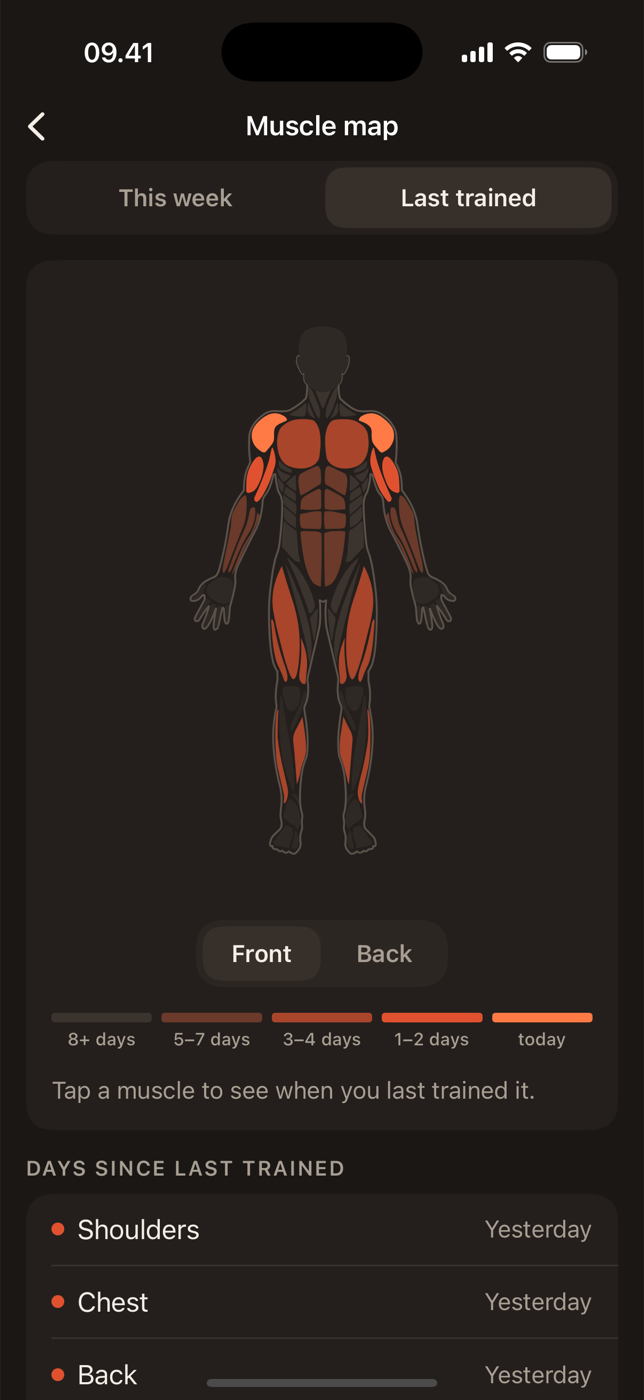
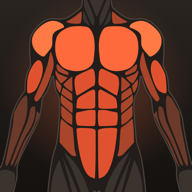
Lift's muscle map does the counting for you: each muscle is coloured by its effective sets for the week, grey at zero and bright orange at twelve or more. A muscle that stays pale for weeks while its neighbours glow is the one that needs sets, not the one that is already bright.
The muscles people undercount
Three groups reliably end up below ten sets on a plan that looks balanced on paper:
- Hamstrings. Squats and leg press barely touch them. They need their own work: Romanian deadlifts, leg curls, hip thrusts.
- Rear shoulders and upper back. Pressing gets counted; rowing gets skipped. If the back view of your map is grey, add rows and face pulls.
- Calves. Almost nothing helps them indirectly. Two or three sets at the end of a leg day is enough to keep them on the map.
A starting point
For a general plan, aim for about 12 effective sets per major muscle per week, spread over two sessions, and adjust from your log. Legs and back can take more, arms usually get plenty from compound helpers, and calves and abs need a few direct sets each. Write it down, train it for six weeks, and let the numbers on the bar tell you which direction to move.