Push Pull Legs, or PPL, sorts every exercise by what the muscles are doing. Push days train the muscles that push weight away from you: chest, shoulders, triceps. Pull days train the muscles that pull weight toward you: back, rear shoulders, biceps. Leg days take everything below the hips. Three days cover the whole body, and the muscles that work together train together, so nothing is tired on the wrong day.
Why it works
Two reasons. First, the grouping is honest about helpers. Your triceps work on every press, so they belong on push day, where the extra isolation set finishes them off rather than pre-fatiguing them the day before chest. Second, recovery lines up: a push day leaves pull muscles fresh, and legs get a full session to themselves.
The main trade-off is frequency. On the three-day version each muscle is trained once a week. That is fine to maintain and progress slowly, but most people grow better hitting a muscle twice. That is what the six-day version is for.
Three days or six
Three days a week (Push, Pull, Legs, with rest days between) suits a busy schedule and beginners who are still building the habit. Each session can be a little longer, five or six exercises, because the muscle then has six days to recover.
Six days a week runs the cycle twice: Push, Pull, Legs, rest, Push, Pull, Legs. Every muscle gets two sessions, and each session can be shorter, four or five exercises. This is the version people usually mean when they say PPL, and it is a lot of gym days. If you can manage four or five days, an Upper/Lower split gets you the same twice-a-week frequency with less time.
A middle path many use: run the cycle continuously on a rolling basis, Push, Pull, Legs, rest, repeat, ignoring the calendar. Each muscle then comes round every four days.
What goes on each day
Push. One heavy press (bench press or incline press), one shoulder press, one more chest movement at a different angle (dips, flyes or a machine press), a lateral raise for side shoulders, and a triceps exercise (pushdowns or overhead extensions).
Pull. One heavy row (barbell or chest-supported), one vertical pull (pull-ups or lat pulldown), a second row or pulldown variation, a rear-shoulder movement (face pulls or reverse flyes), and a biceps exercise. Deadlifts fit here or on leg day; pick one and keep it there.
Legs. A squat pattern (back squat, front squat or hack squat), a hinge for the hamstrings (Romanian deadlift or leg curl), a single-leg or unilateral move (split squats or lunges), leg extensions or leg press for extra quad volume, and calves. Abs go wherever you have four minutes left.
The mistake that shows on the muscle map
Push day is fun. Pull day is homework. Over a few months many PPL plans drift into an extra press here, a skipped row there. The result is a body that is strong at the front and undertrained at the back: rounded shoulders, a weak upper back, and eventually a shoulder that complains on bench.
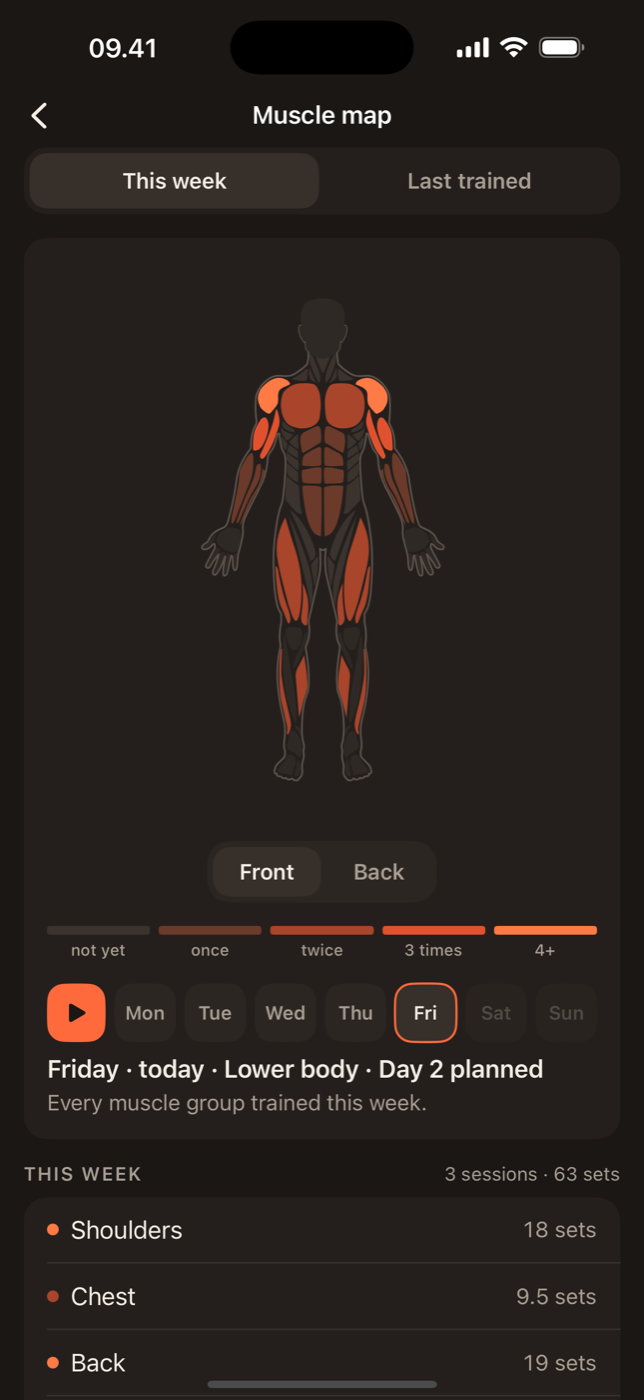
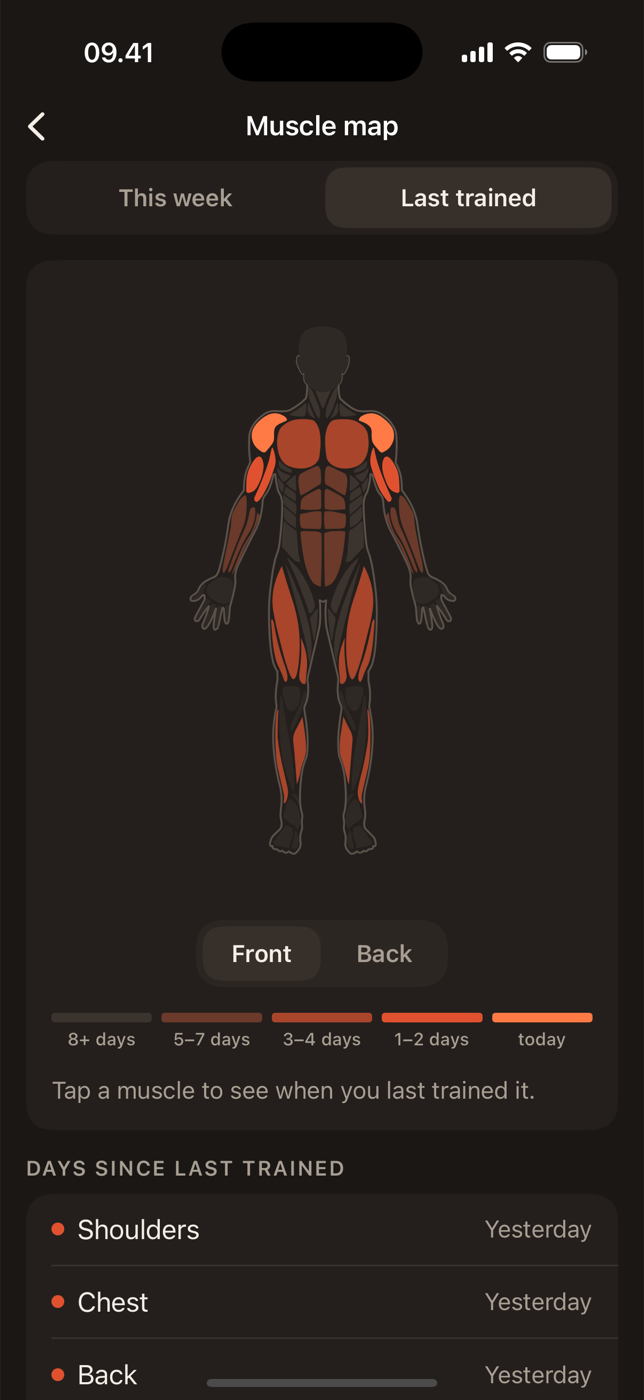
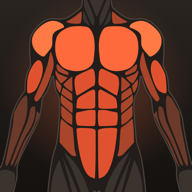
The fix is a rule: at least as many pull sets as push sets each week, and rows before curls. If you log with Lift, flip the muscle map to the back view at the end of the week. Upper back and rear shoulders should be as warm as the chest on the front view. If they are not, next pull day gets an extra set of rows and next push day loses one.
How many sets
Using the 10 to 20 sets a week guideline and counting helpers at half, a six-day PPL lands most muscles at 12 to 16 effective sets with four to five exercises per session at three sets each. The three-day version gets there with five or six exercises. You do not need more than that to start; add sets when a lift has not moved in three weeks.
Setting it up in Lift
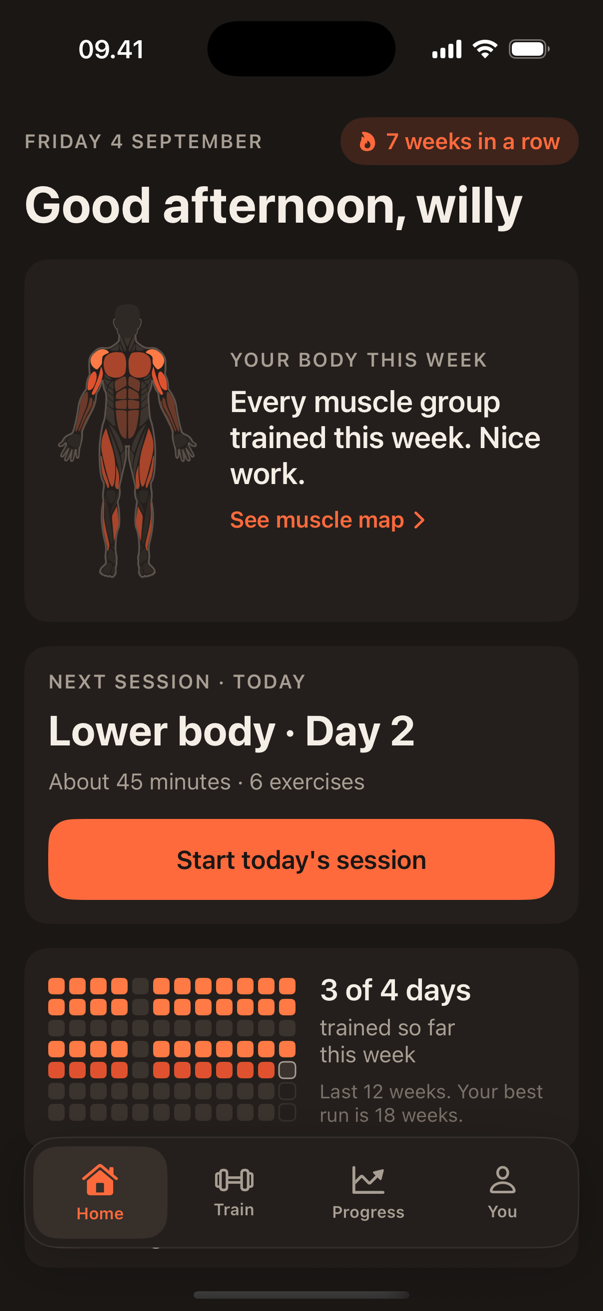
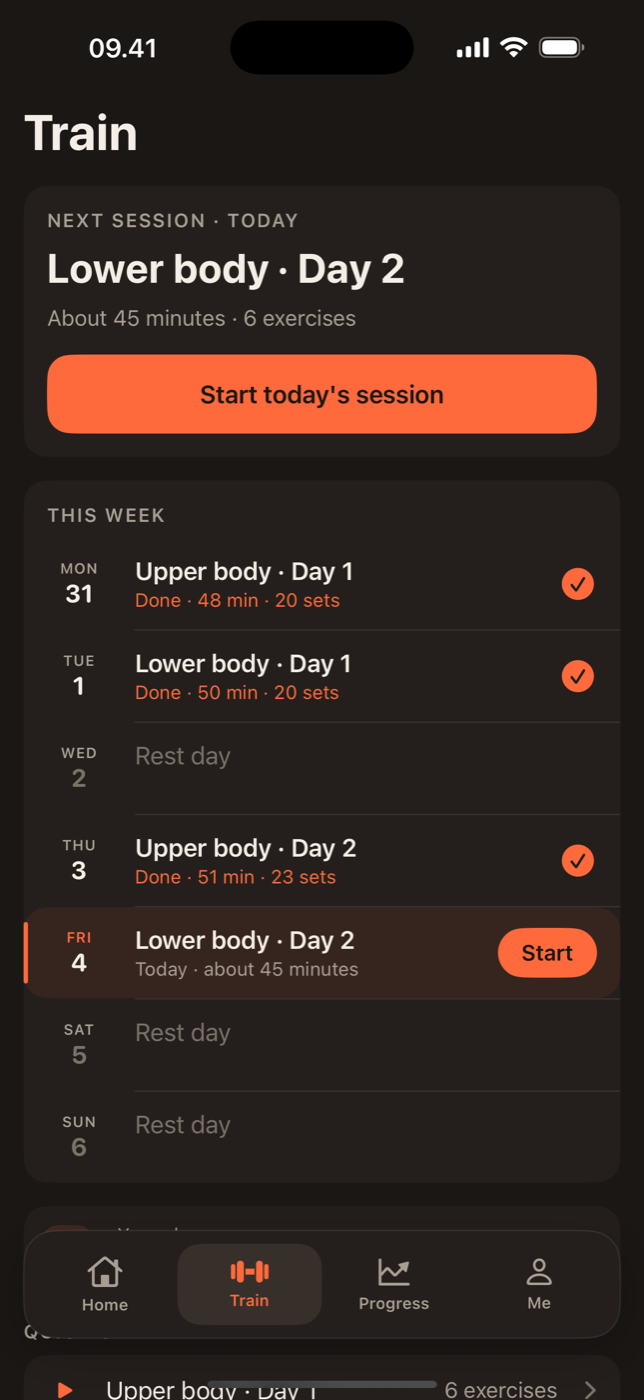
Lift's Push Pull Legs template has both versions. Pick three or six days in onboarding or from the Train tab, and the days come filled with the exercises above at three sets each with sensible rest. Swap any exercise for one that hits the same muscles from the library, and the plan is yours. The map will tell you within two weeks whether the pull days are keeping up.